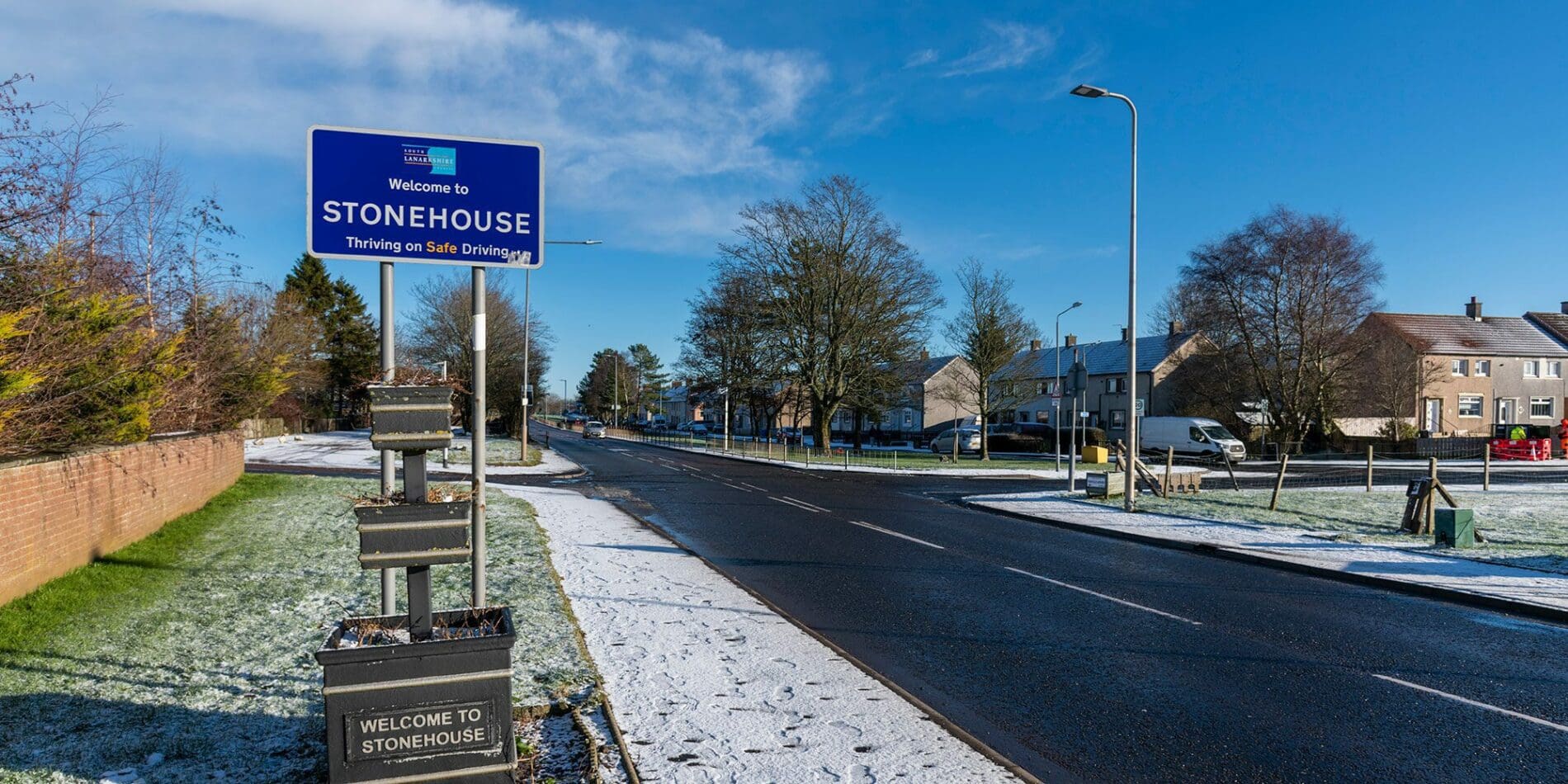
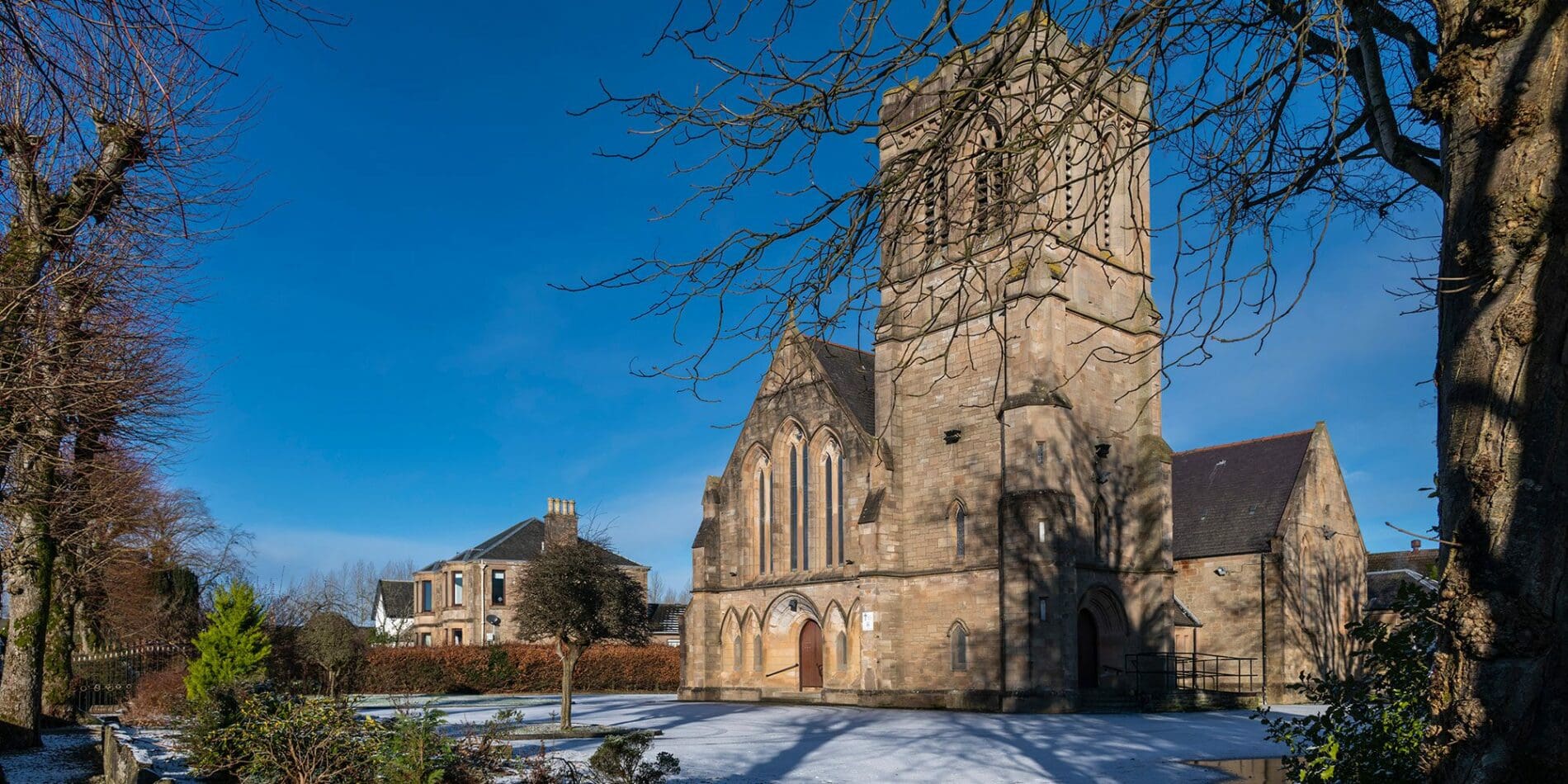
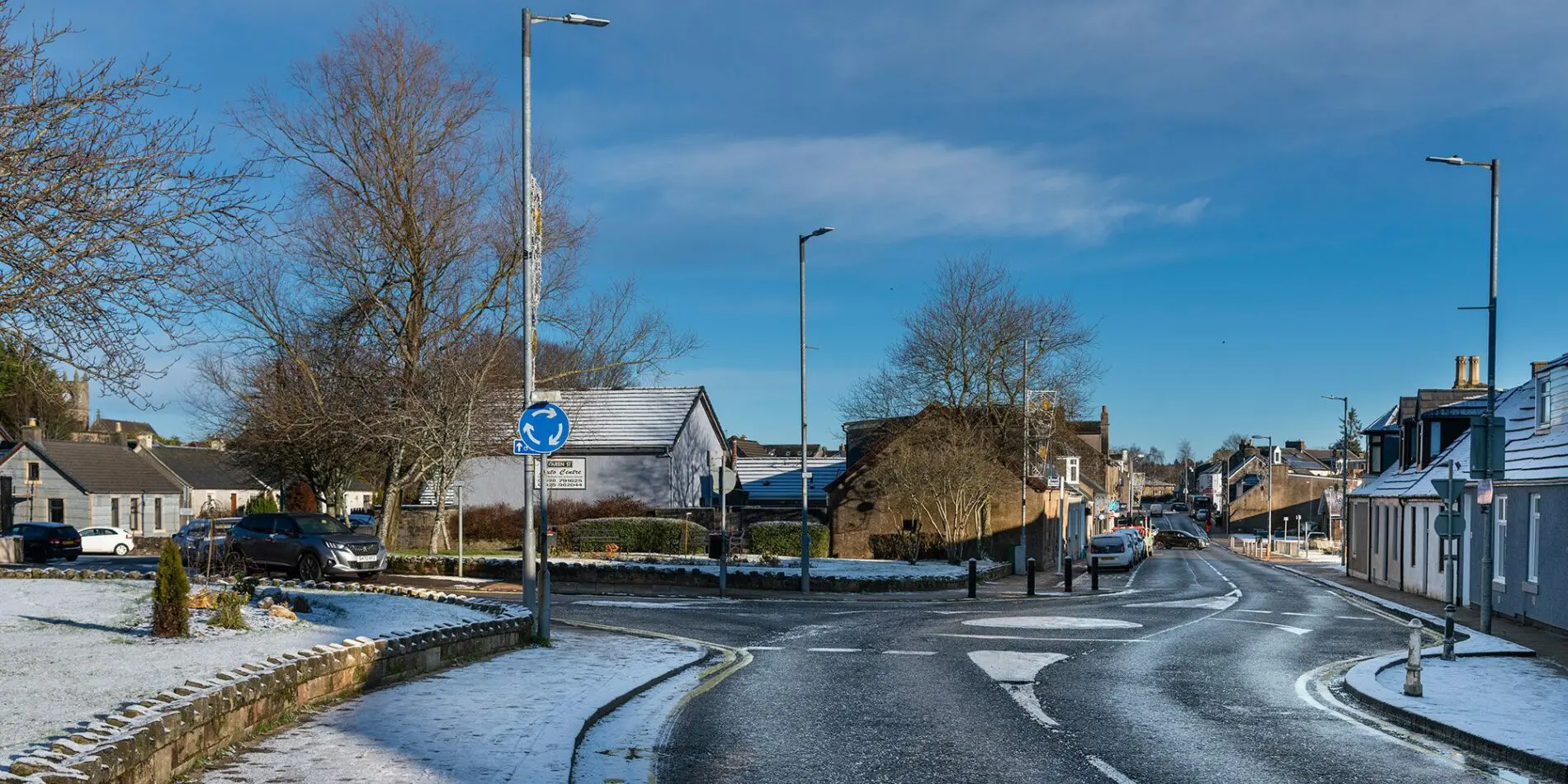
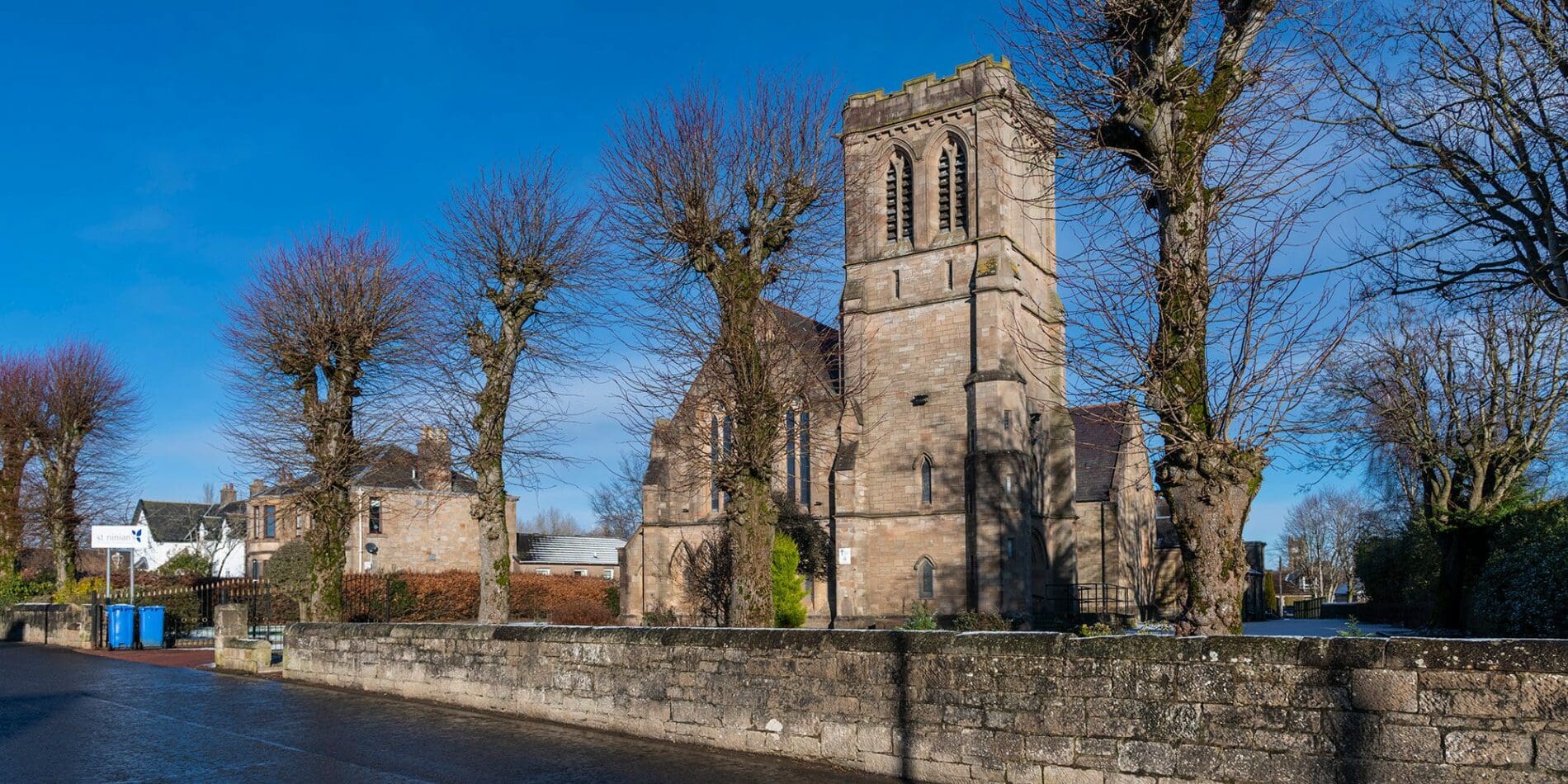
Stonehouse is a thriving village nestled in the Avon valley, set in the peaceful surroundings of the countryside and rolling hills. The river Avon is one of the most enduring and beautiful rivers in Scotland and it offers the family an opportunity to see many rare species of wildlife.
Walks by the river allow you to experience the natural haven for the birds and wildlife including mink, deer and badgers. The Avon and Cander gorge are sites of special scientific interest and well worth a visit.
The name Stonehouse may have come from ancient druids term for 'stanes' which were places of worship, however, some people claim that the name came from the Roman Stannis, which is possible, as part of an ancient Roman Road and Fort lie nearby.
The earliest record of a landowner in Stonehouse dates from around 1220, when Sir William (the Fleming) de Douglas of Stannous, appears as a witness to a charter along with Sir Archibald Douglas. The Douglas's were the chief landowners of the parish until the reign of James II who endeavoured to destroy the Douglas's and install the Hamilton's to the Barony of Stonehouse.
The Stonehouse Weavers date back to the mid 1700s with the production of mainly plain-weave products. Wives also played their part by garnering, dressing and spinning fine threads from the natural fibres grown at the Linthaugh (lying beside the river Avon). This was followed by the processing of imported Dutch flax into linen. Tambouring and flowering of muslin, embellishing of gingham, and fine stitching of hand-sewn silk goods brought revenue to the village.
The Agricultural Revolution which started in the late 18th century brought great changes to certain areas. The number of weavers rose from around 8,500 in 1792 to 50,000 in 1800 and 84,000 in 1838 - a sizeable proportion of the Scottish population. Stonehouse weavers mainly produced silk scarves, handkerchiefs and other items, mainly for export to India. The patterns that could be produced were previously beyond conception.
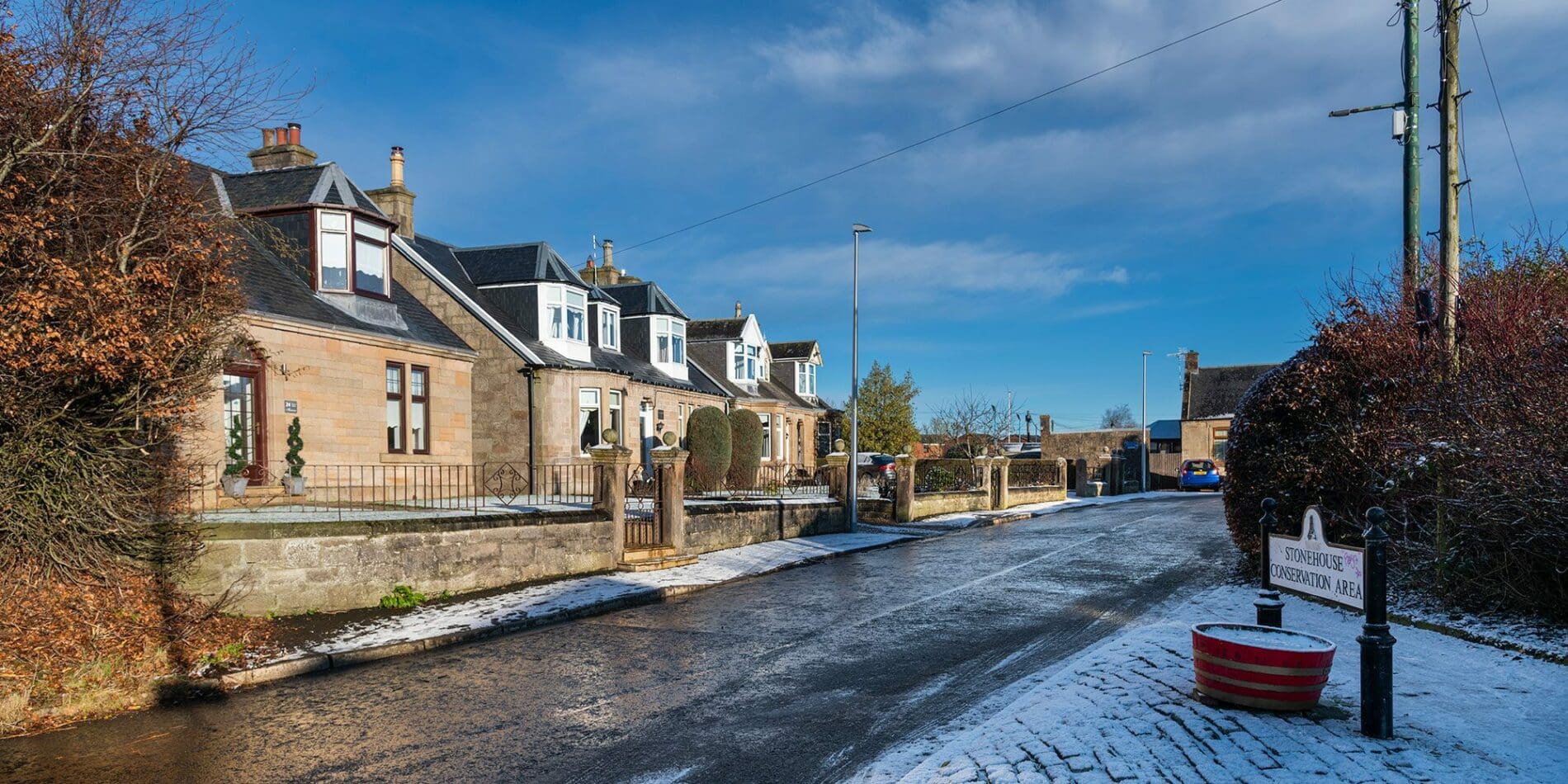
The 1830s were the growth years for the village, and the weavers became renowned for their workmanship, establishing a reputation as masters of their craft. In 1831 there were around a peak number of 600 working in the village. During this time the weavers were often prosperous enough to own their own property. Streets of privately owned cottages were built such as those of Hill Road, Camnethan Street and Queen Street. These Streets form part of the conservation area and still retain the character and beauty of their former existence.
In 1841 there was talk of decline, despite the fact that there were 400 weavers working in Stonehouse rising to 500 in 1891. With the introduction of the power loom, handloom weavers were unable to compete. However, Stonehouse weavers were able to adapt better than others, specialising in fine silks, woven on the intricate patterns of the Jacquard loom.
As work became scarce towards the end of the nineteenth century the weaver’s sought employment in agriculture or in the mines to supplement their income. The two last weavers in Lanarkshire were the Hamilton brothers, Robert and James, of Camnethan Street. James died at the age of 84 in 1959 and completed his last "wab" in 1939. The silk loom belonging to the Hamilton Brothers now rests in the Royal Scottish Museum, Edinburgh.
In the Stonehouse area, a number of the miners still worked in Boomfield pit near the site of the current M74 motorway, during the 1940s. The site has now been cleared, as have most other pits in Lanarkshire. In 1947, there were 190 pits of various sizes in Scotland, by 1987, there were just five.
The vast percentage of coal seams have been worked out and there are no operating pits in the present day. The last colliery to be closed in the Stonehouse district was Candlerigg Colliery in 1958. We still have a legacy of the coal mining industry, with properties subsiding due to old mining works below, a prime example being the Hamilton Palace which was demolished in 1921.